Real care for the things that actually matter to you
Men's health isn't just testosterone. It's how you feel day to day. How much energy you have. How your hair looks. And yes, your hormones too.
This guide covers all of it. Testosterone, libido, and sexual performance. Hair loss treatment that actually works.
Whatever's on your mind, we start the same way: a real check-up, not guesswork.
Everything we offer, in one place
Pick a treatment to get started, or learn more about how it works.




Skin Health
Prescription-strength skin support, reviewed by a licensed provider.
Testosterone drops slowly, and it shows up everywhere
Roughly 4 in 10 men 45 and older have low testosterone. Low testosterone (sometimes called 'low T') just means the main male hormone is below the normal range.
Testosterone runs more of your life than most men realize. Levels peak in your 20s, then drop about 1% a year after 30. That decline doesn't stay invisible for long.
Internally, it shows up as less energy, worse sleep, a flatter mood, and slower recovery. Externally, it shows up as softer muscle, more stubborn fat around the midsection, thinner skin, and less drive, and the version of you in the mirror starts feeling like a stranger.
If you're dealing with low energy, low sex drive, weaker muscle, or trouble focusing, testosterone is one of the first things worth checking, not guessing about.
Your provider checks your levels with a simple blood test before starting anything, so your plan is built on your real numbers, not assumptions.
Daily habits show up in the lab results
A few everyday things show up again and again in studies of testosterone in older men. None is a magic fix. Together, they add up.
- More body fat, especially around the belly
- Smoking (vs. never smoking or quitting)
- Little exercise, especially not lifting weights
- Poor or short sleep, or untreated sleep apnea
About 1 in 5 older men in this study had low testosterone. Men who did regular strength training and didn't smoke had lower rates.
What men most often bring up
These are common signs, not a diagnosis. Your provider connects them with real bloodwork to figure out what's actually going on.
- Tiredness during the day, even after sleep
- Losing muscle or strength
- Low sex drive or trouble with sexual function
- Mood changes, feeling irritable, flat, or low
- Trouble focusing or 'brain fog'
- Weaker bones over time
Sex drive isn't just one thing
Sex drive depends on three things at once: testosterone, blood flow, and how you feel mentally. A change in one throws off the others.
That's why we don't treat libido and performance as separate problems. A real check-up looks at both together, and your plan can include support for each.
One medicine that comes up here is Enclomiphene. It's different from taking testosterone directly. Instead, it tells your body to make more of its own testosterone naturally.
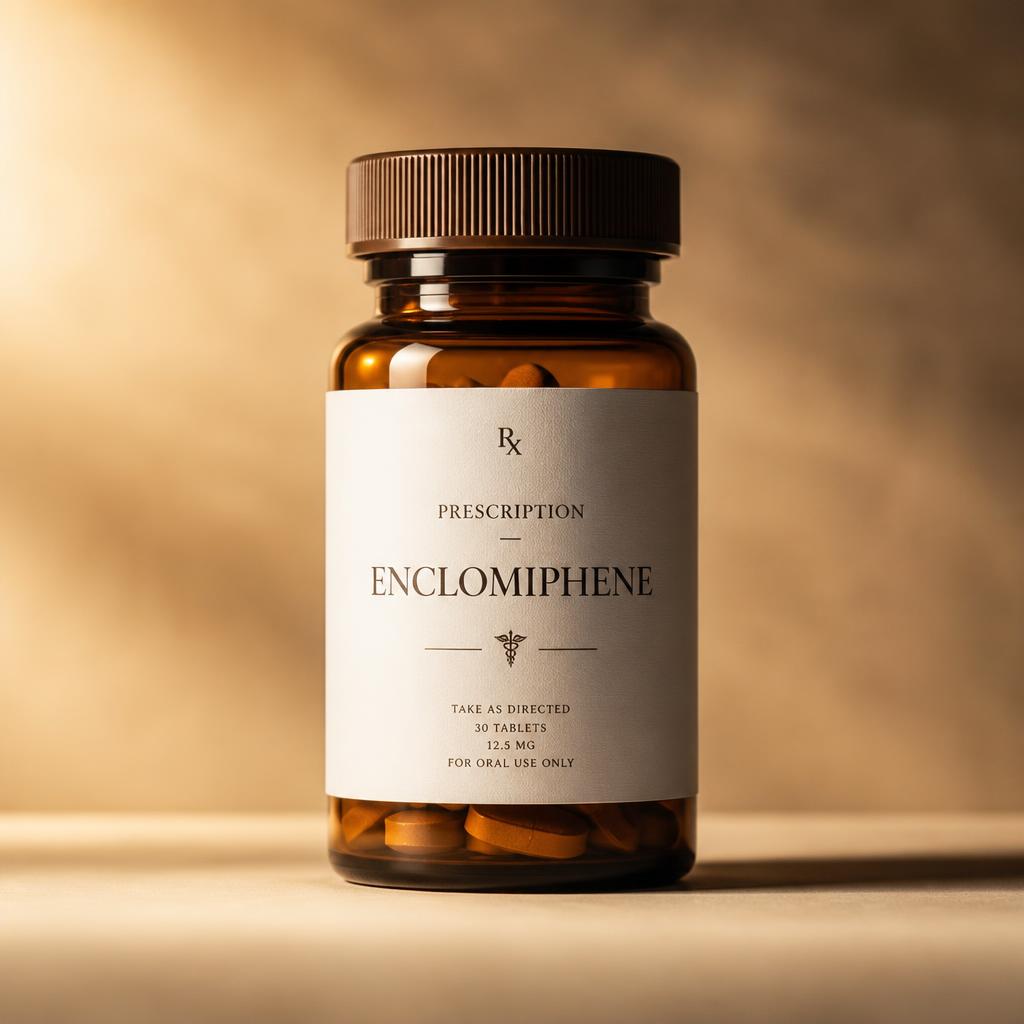
Support your body's own testosterone
Enclomiphene is a daily tablet that signals your body to make more of its own testosterone, a different path than replacement therapy. Prescribed only when your labs and check-up say it's the right fit.
Not everyone needs the same approach. If your labs show your body can still respond on its own, Enclomiphene is often tried first, since it works with your natural production instead of replacing it. If your levels are low enough that this won't be enough, traditional testosterone replacement therapy (TRT) may be the better fit. Your provider decides which path makes sense after seeing your bloodwork, not before.
Genes and a hormone called DHT
Most male hair loss is genetic. Doctors call it androgenetic alopecia, the medical name for male pattern baldness.
The hormone behind it is DHT (dihydrotestosterone). DHT comes from testosterone, and over time it can shrink hair follicles in men who are genetically prone to hair loss.
Two treatments have worked for decades: finasteride, a pill that lowers DHT, and minoxidil, a liquid you put on your scalp to help hair grow back. Both are prescribed and watched over by a licensed provider.
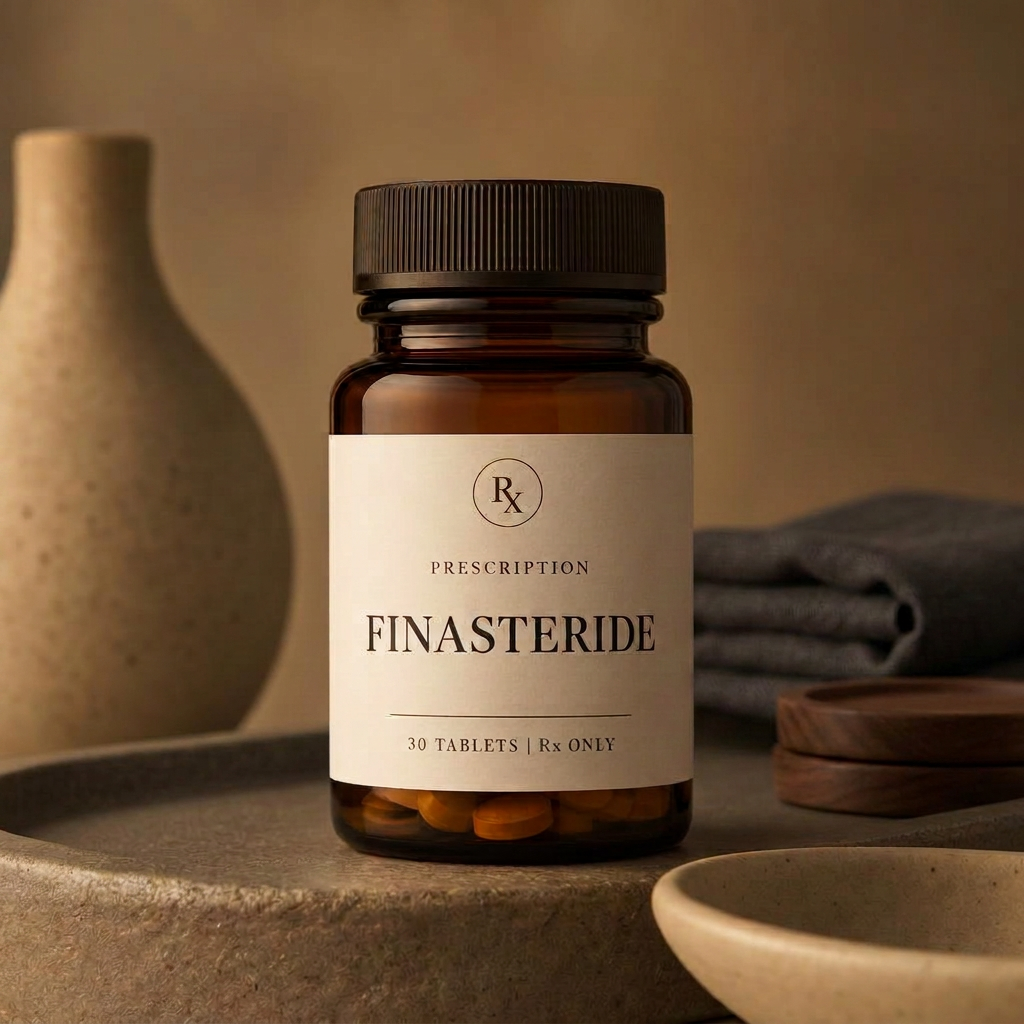
Finasteride
A daily oral tablet that lowers DHT, the hormone driving most male hair loss.
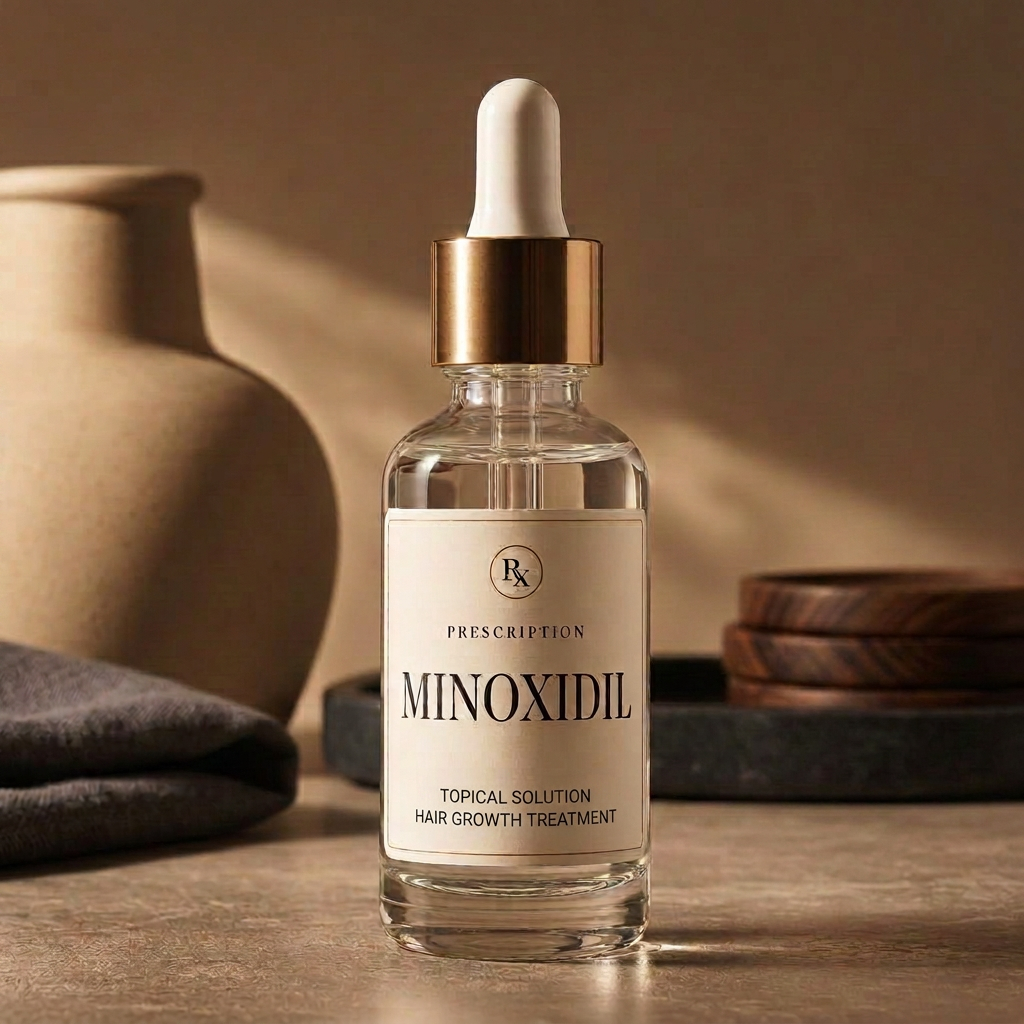
Minoxidil
A topical solution applied to the scalp to encourage new hair growth over time.
A small molecule your cells run on
NAD+ is a helper molecule found in every cell. Your body uses it to turn food into energy and to repair everyday damage to your cells.
Levels drop as you get older. That drop is part of why energy, recovery, and focus often feel different in your 40s and 50s than they did in your 20s.
A daily NAD+ nasal spray is a simple way to support those levels, with no needles and no clinic visit. Prescribed and watched over by a licensed provider.
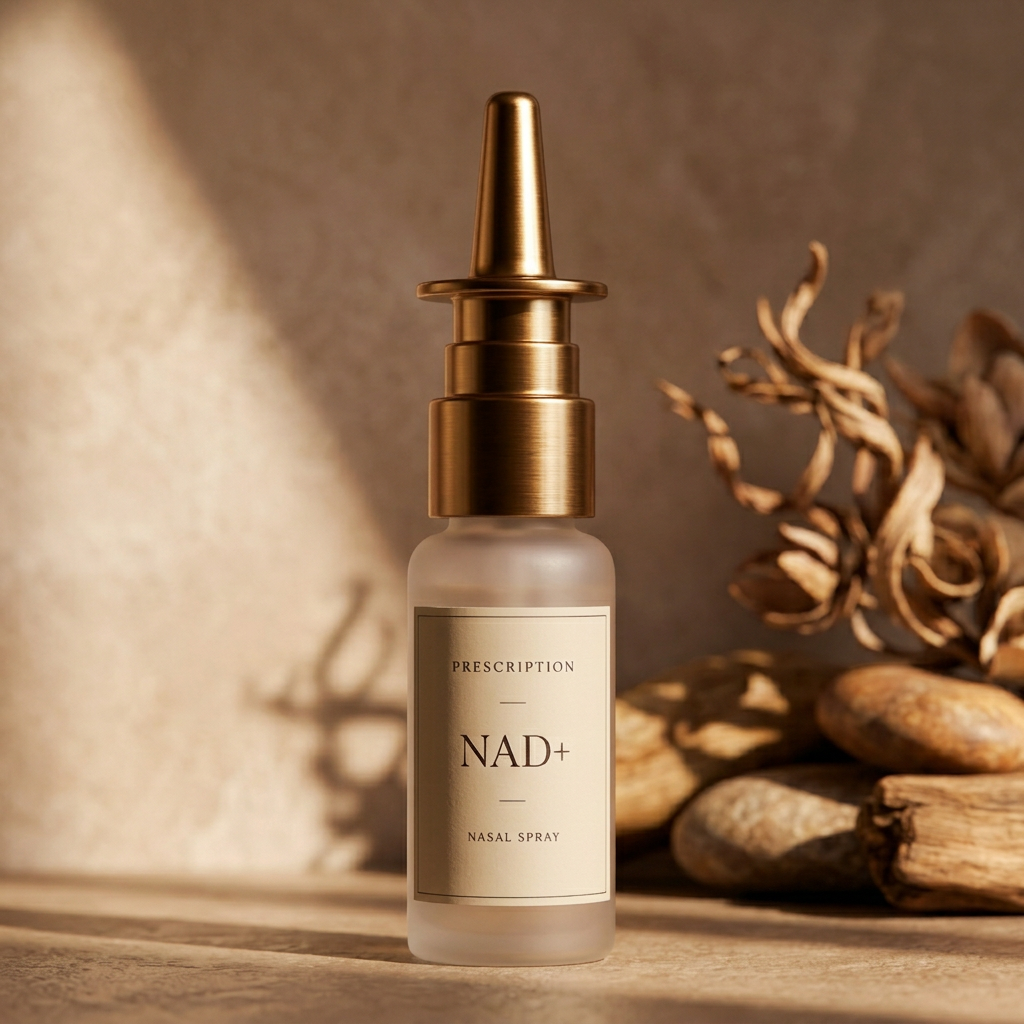
Prescribed only if appropriate for you, with no commitment required.
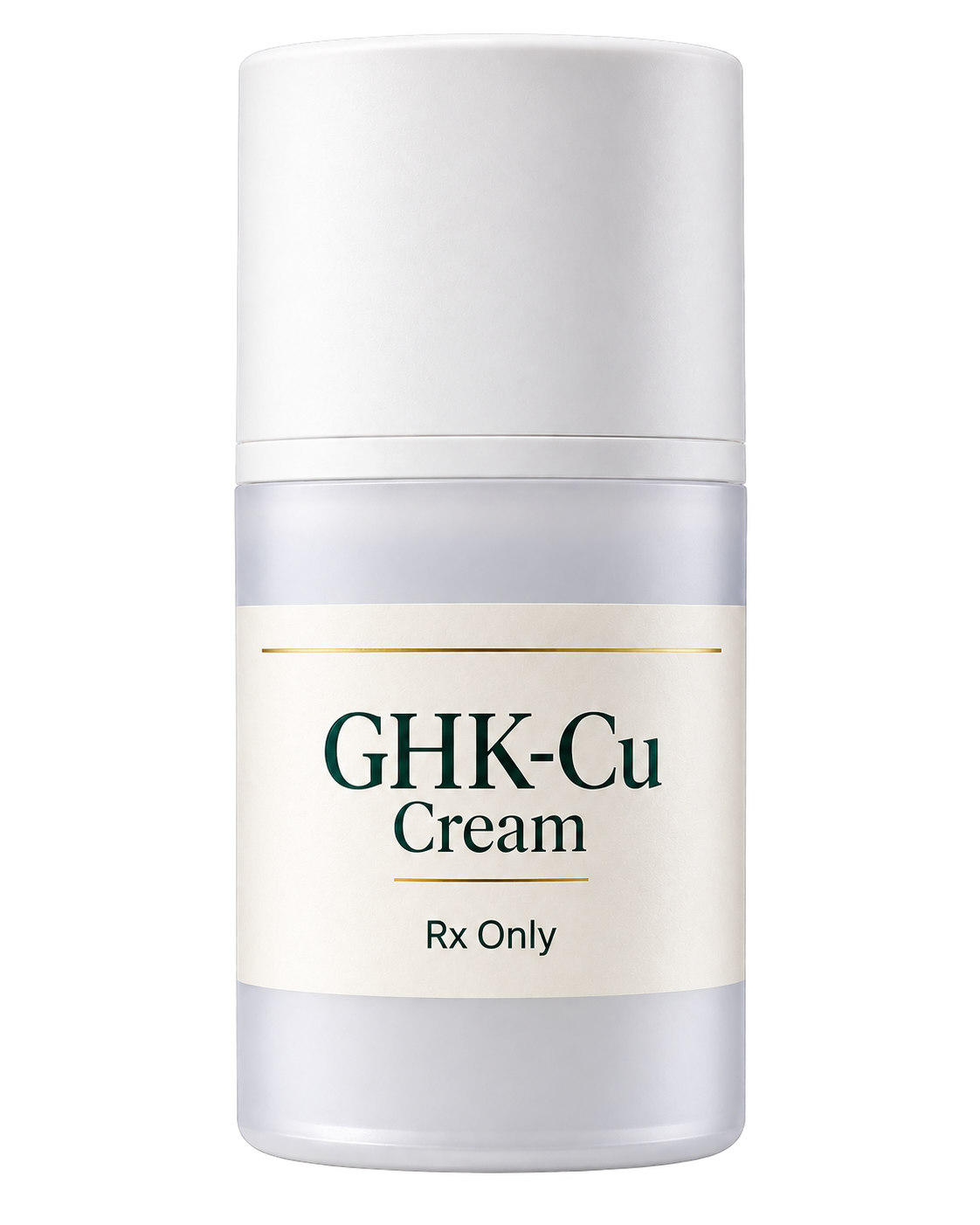
Your skin changes as you age. This helps.
Collagen and skin firmness naturally decline with age, and it shows up in how you look and feel. GHK-Cu is a naturally occurring compound that plays a role in skin repair and renewal. A prescription-strength cream supports elasticity and firmness, reviewed and approved by a licensed provider.
Why men choose Neshiva: the research behind the results.
Why men choose Neshiva? It works.
Real numbers from published research, the same data our providers use when deciding whether treatment is right for you.
In their own words.
"Bloodwork first, then a real plan. I finally understood what was going on with my energy."
"My energy and focus are noticeably better. Testosterone care finally feels like real medicine, not guesswork."
"Straightforward pricing, no upsell. My provider actually answers messages."
"Started finasteride and minoxidil together, and my hairline hasn't moved in six months."
"Enclomiphene made a real difference in drive and focus. Wish I'd done labs sooner."
"One portal for hormones, hair, and ongoing care. Care that finally feels connected."
Good questions.
A real check-up, start to finish
Our men's health program starts with a licensed provider, not just a form. Depending on your intake and lab results, care can include:
Hormone testing
A blood test at home or at a lab to see where your testosterone and other levels actually stand.
TRT or Enclomiphene, whichever fits your labsTRT when it fits
Some men do well supporting their body's own testosterone with Enclomiphene. Others need traditional replacement therapy (TRT). Your provider chooses based on your bloodwork, not guesswork, and follows your levels over time.TRT stands for testosterone replacement therapy. It's only prescribed when your labs and check-up say it's the right move, and it's followed over time.
Hair loss treatment
Finasteride and minoxidil can be added to your plan to slow, stop, or regrow hair loss, prescribed and watched over by a provider.
Our commitment to you
If a licensed clinician determines treatment isn't right for you at intake, you won't be charged for the medication. Care that's honest, or nothing at all.
Important
This page is for educational purposes and reflects published clinical research. It is not a diagnosis. Only a licensed provider can determine if treatment is right for you, based on bloodwork and a full evaluation.
Learn more about our program
Clinician-led care, delivered discreetly.